

The Best Magic Tricks Kit for Every Age
 By The MentalismPro TeamUpdated
As an Amazon Associate we earn from qualifying purchases. How we choose products.
The best magic tricks kit is the one that matches the age of the person opening it. For a child of 5 to 7, pick a small kit with a handful of sturdy, self-working tricks, such as Jim Stott's My First Magic Kit. For ages 8 to 12, a larger box like the National Geographic Mega Magic Kit gives enough variety to find a favorite. For teens and adults, a broad set like the Penn & Teller Magic Kit works, but a deck of cards and a good book usually teach more.
This guide explains how to choose by age, what separates a good kit from a disappointing one, which five tricks to learn first from any box, and how to turn a child's first show into a success. Then it reviews six kits honestly, including what each one will not do.
Editor's Choice
National Geographic Mega Magic Kit
Built for the age group that buys the most magic kits, 8 to 12, with more than 75 tricks according to its title. Big enough to explore cards, coins and illusions, and focused enough that a child can master a short set and perform it for the family.
-
Best for ages 5 to 7
Over 50 easy tricks aimed at ages 5 to 12, a gentle first step for young hands.
-
Best for teens and adults
A wand and more than 200 tricks from two of the best-known names in magic.
Magic Tricks Kit Comparison
Five of the kits at a glance. Age is the range the product name or its maker states; the price tier is relative to the other kits on this page.
| Kit | National Geographic Mega Magic Kit Editor's Choice | Jim Stott My First Magic Kit | Melissa & Doug Wooden Magic Set | MindWare Hocus Pocus Magic Show | Penn & Teller Magic Kit |
|---|---|---|---|---|---|
| Kit |  |  |  | 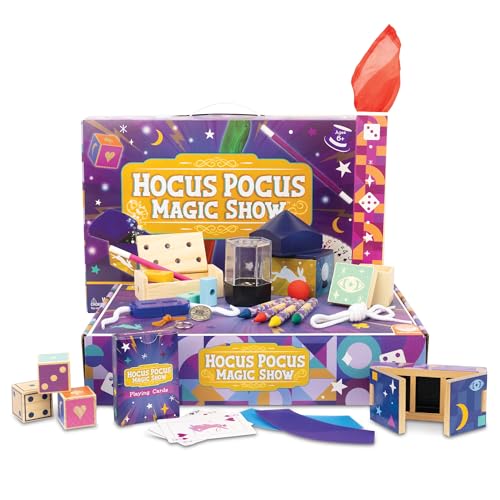 |  |
| Age | 8 to 12 | 5 to 12 | Younger kids | Kids | Teens and adults |
| Tricks (per title) | 75+ | 50+ | 10 classics | 25+ | 200+ |
| Best for | Exploring many kinds of magic | A very first kit | Durable props for small hands | Putting on a show | Older beginners |
| Price tier | $$ | $ | $$ | $$ | $$ |
| Buy | Check price | Check price | Check price | Check price | Check price |
Editor's Choice
National Geographic Mega Magic Kit
- Age
- 8 to 12
- Tricks (per title)
- 75+
- Best for
- Exploring many kinds of magic
- Price tier
- $$
Jim Stott My First Magic Kit
- Age
- 5 to 12
- Tricks (per title)
- 50+
- Best for
- A very first kit
- Price tier
- $
Melissa & Doug Wooden Magic Set
- Age
- Younger kids
- Tricks (per title)
- 10 classics
- Best for
- Durable props for small hands
- Price tier
- $$
MindWare Hocus Pocus Magic Show
- Age
- Kids
- Tricks (per title)
- 25+
- Best for
- Putting on a show
- Price tier
- $$
Penn & Teller Magic Kit
- Age
- Teens and adults
- Tricks (per title)
- 200+
- Best for
- Older beginners
- Price tier
- $$
How to Choose a Magic Tricks Kit by Age
Age is the single best predictor of whether a kit gets used. The question is not how many tricks are in the box, but how many the person can perform on day one without help.
Ages 5 to 7: Few Tricks, Big Props
Young children need tricks that work by themselves, like a box that makes a coin vanish. Sleight of hand and long instructions are out of reach at this age. Look for chunky props and ten to fifteen tricks they can actually do. A magic kit for a 5 year old should feel like a toy that does something surprising, not a course.
Ages 8 to 12: The Sweet Spot
This is the age when most children fall in love with magic: they can follow written steps and practice alone. A magic kit for kids in this range can mix cards, rope, coins and simple illusions, and the variety shows which kind of magic they enjoy. A magic kit for a 10 year old can be the larger box; a 7 or 8 year old will be happier with a medium one.
Teens and Adults: Skill Over Gadgets
From around 13 upward, a pure toy kit tends to disappoint. Teens want tricks they can perform for friends without it looking like a toy, which means cards, coins and borrowed objects. A broad magic set aimed at older buyers can still be a good gift, but the honest answer for most adults is different, and it has its own section below.
What Separates a Good Magic Kit From a Bad One
Two kits with the same number on the lid can be completely different experiences. These are the signs to check before you buy.
Props That Survive the First Week
Thin plastic gimmicks crack and sponge balls vanish under the sofa. Wooden or thicker props last longer and look less like toys. Real-size playing cards matter too: flimsy, undersized cards make every trick look cheap.
Instructions You Can Actually Follow
A tiny folded leaflet with small diagrams is the most common reason a kit gets abandoned. Clear step-by-step instructions, ideally with photos or video lessons, make the difference between a child who performs and one who gives up. Before buying, check what format the maker says the instructions come in.
The Inflated Trick Count
A "200 tricks" claim often counts variations of one idea, or tricks that need items you do not have. Ten solid tricks performed well are worth more than a hundred footnotes.
| Check | Good kit | Weak kit |
|---|---|---|
| Props | Sturdy, wood or thick plastic, real cards | Thin plastic, undersized cards |
| Instructions | Step by step, with photos or video | Small leaflet with tiny diagrams |
| Trick count | Distinct effects you can perform | Variations counted as separate tricks |
| Age fit | Self-working tricks for young kids | Sleight of hand in a kit for 6 year olds |
| Extras needed | Everything in the box | Many tricks need items you must find |
The Best Magic Tricks Kit Picks, Reviewed
Six kits, from the best all-round choice to the more specialized picks. Each review sticks to what the product's name and maker state.
National Geographic Mega Magic Kit (Editor's Choice)
Who it is for: children from 8 to 12, according to the product name, with more than 75 tricks in the box. That age range is where a mid-size kit pays off most, because the child can read the steps, practice alone and perform for an audience within days.
The appeal is breadth with a recognizable brand behind it. A child can try several kinds of magic, then settle on the five or six tricks that feel natural. For a first gift in this age group, it is the safest choice on this page.
- ✅ Aimed squarely at the age that uses magic kits most
- ✅ Enough variety to discover a favorite style
- ✅ A strong gift for birthdays and holidays
- ❌ Too much for a 5 or 6 year old
- ❌ As with any big kit, not every one of the 75+ tricks is worth performing
Jim Stott My First Magic Kit (Best for Young Kids)
Who it is for: young beginners, with an age range of 5 to 12 and more than 50 easy tricks according to its title. Jim Stott is a children's entertainer, and the kit is built around tricks that are simple to do.
For a 5, 6 or 7 year old, this is the gentler start. Easy tricks mean early wins, and early wins are what make a child want to keep going. Older children in the range may outgrow it quickly, which is fine: it is a first kit, not the last.
- ✅ Designed around easy tricks for small hands
- ✅ The widest age range on this page
- ✅ Budget tier, so a low-risk first purchase
- ❌ A 10 to 12 year old may find it too simple
- ❌ Younger children will need an adult for the first read-through
Penn & Teller Magic Kit (Best for Teens and Adults)
Who it is for: older beginners who want a broad tour of magic. The title promises a wand and more than 200 tricks, and the Penn & Teller name carries real weight with teens and adults who have seen them on stage or on television.
It is a general magic set, not a mentalism course, and its value is in discovering which kind of magic you enjoy. If the answer is cards or mind reading, the next step is a deck and a book, not a bigger box.
- ✅ The broadest kit on this page
- ✅ A recognizable name that makes it a strong gift
- ❌ 200+ is a headline number; the core of strong tricks is smaller
- ❌ Some props will feel like toys to an adult
Melissa & Doug Deluxe Wooden Magic Set
Who it is for: younger children who will handle the props roughly. The title lists 10 classic tricks, and the selling point is the material: wooden props tend to survive drops far better than thin plastic.
Ten tricks sounds modest, but for a young child it is close to ideal: each one can be learned, rehearsed and performed.
- ✅ Wooden props built to last
- ✅ A short list of classics a young child can actually master
- ❌ Only 10 tricks, so an older child will want more
- ❌ Classic props are familiar to adults, so the surprise is gentler
MindWare Hocus Pocus Magic Show
Who it is for: children who want to put on a show, not only learn tricks. The name says it plainly, and the title lists more than 25 tricks, which is a sensible number for building a short performance for family or friends.
A show theme nudges a child toward what kits often skip: running order, talking to the audience and finishing strong.
- ✅ Framed around performing a show, which builds confidence
- ✅ A focused number of tricks, easier to rehearse
- ❌ Fewer tricks than the big mega kits
- ❌ Teens will want something less toy-like

Mega Magic Kit for Kids
Who it is for: a child who wants as much variety as possible. The title promises "100's of tricks", which puts it among the biggest numbers on this page.
Treat a count like that as a menu rather than a curriculum. A child who enjoys browsing will be happy; one who wants a polished routine needs an adult to help pick the best five.
- ✅ Maximum variety for an explorer
- ✅ Budget tier for the amount in the box
- ❌ Hundreds of tricks means many minor ones
- ❌ No big-name brand, so check the listing for age and contents
Magic Kit for Adults: What to Buy Instead
Most boxed kits are designed for children, and an adult opening one usually notices within minutes. The honest advice for a grown-up beginner is to skip the toy box and build a small kit of their own.
Why Children's Kits Rarely Work for Adults
Adult audiences recognize plastic gimmicks instantly. The strongest magic for grown-ups uses ordinary objects, a borrowed deck, a coin, a pen, so the audience cannot blame the prop.
The Three-Item Kit That Teaches More
A deck of real cards, a classic book and one or two specialty props will teach an adult more than any boxed set. Self-Working Card Tricks by Karl Fulves is a Dover classic of tricks that need no sleight of hand, and it pairs naturally with our free easy card tricks. For the specialty props, our guide to the best mentalism tricks to buy covers what goes in a kit for adults, so it is not repeated here.
Magic or Mentalism?
Many adults discover that they enjoy mind reading effects more than vanishing coins, because mentalism needs fewer props and plays to conversation. If that sounds like you, read how mentalism differs from magic before buying anything else.
An Adult Starter Kit That Beats the Box
Three purchases that cover cards, technique and a bank of routines.
-
1The cards
Bicycle Playing Cards (2 pack)
The standard deck magicians use; two decks mean a spare for tricks that need one.
-
2The book
Self-Working Card Tricks by Karl Fulves
Card tricks that work without sleight of hand, so you can perform from the first evening.
-
3The card set
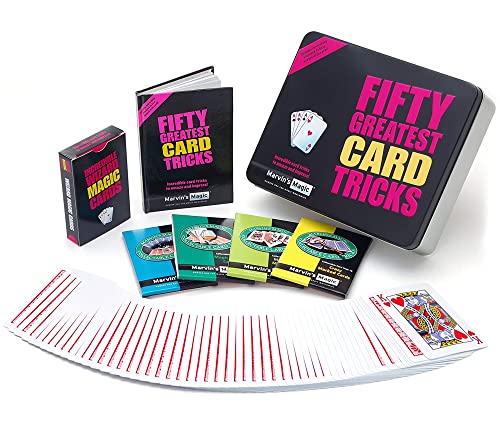
Marvin's Magic Fifty Greatest Card Tricks
A card-focused set built around fifty tricks, for someone who prefers a box to a book.


The First 5 Tricks to Learn From Any Kit
Whatever is in the box, these five types of trick give a beginner a balanced first set. Almost every magic tricks kit contains a version of most of them.
Five Tricks to Learn First
-
A card discovery
A spectator picks a card and you find it. It is the backbone of card magic, it uses the deck every kit includes, and it teaches the basic rhythm of a trick: choice, mystery, reveal.
-
A vanish
A coin, ball or small object disappears. Vanishes are short, visual and easy to understand for any audience, including very young siblings.
-
A restoration
Something is cut, torn or broken and then restored, often a rope or a piece of paper. Restorations give a show a clear story with a beginning and an end.
-
A prediction
You write or seal a prediction before a choice is made, and it matches. A prediction is the first taste of mentalism and works brilliantly as a closer.
-
An appearance
Something appears from nowhere: a ball under a cup, a coin from an ear, a card from an empty box. It makes a strong opener because it grabs attention at once.
Learn them one at a time, each working ten times in a row at the mirror before moving on. Then try our free mentalism tricks, which use the same objects in a new way.
How to Make a Child's First Magic Show a Success
The first performance decides whether the kit becomes a hobby or a forgotten box. A little planning from a parent makes a big difference.
Keep It Short: Three to Five Tricks
Five minutes is plenty for a first show. Open with an appearance, put the card trick in the middle and close with the prediction or the restoration. Ending on the strongest trick is the oldest rule in magic, and it works for 7 year olds too.
Before the family show, let the child rehearse for one patient adult, where mistakes can be fixed privately.
Give Every Trick a Line to Say
Concentrating children perform in silence. Help them write one sentence per trick, such as "This rope is about to have a very bad day".
Plan for the Trick That Goes Wrong
Teach a simple recovery: smile, say "that one is still practicing", and move on. Audiences forgive a mistake handled with good humor.
Free newsletter
Mentalism, made modern. In your inbox.
Occasional emails from the MentalismPro team: a technique to practice, a routine idea, and the new guides and books worth your time. No spam, unsubscribe any time.