

Technique
The Memory Palace: A Practical Guide to the Method of Loci
 By The MentalismPro TeamUpdated
As an Amazon Associate we earn from qualifying purchases. How we choose products.
A memory palace is a place you already know well, such as your home, used as a filing system for things you want to remember. You pick a fixed route through it, attach one vivid image to each stop, and later walk the route in your mind to read the images back in order. The technique is also called the method of loci (Latin for "places"), and it is the core method of competitive memory athletes.
It works because memory is far better at places and pictures than at lists of abstract words. Below: where the method comes from, what the research shows, how to build your first palace in about twenty minutes, a worked example, common mistakes, and how mentalists use memory systems. It sits alongside the other skills in our guide to mentalism techniques.
What Is a Memory Palace?
A memory palace is a mental map with numbered parking spots. The "palace" is any location you can walk through in your head without effort: an apartment, a childhood home, a school, a street. The "loci" are distinct spots inside it, such as the front door, the coat hook or the kitchen sink, visited in the same order every time. To memorize something, you turn each item into a strong image and leave it at the next spot.
Why Places and Pictures Work
Most people can describe a house they lived in years ago, yet struggle to recall a ten-word list after an hour. The palace borrows that strong spatial memory as scaffolding: the route provides order and cues, the images provide content, and recall becomes a walk rather than a search.
Memory Palace vs. Method of Loci
Same technique, two names. "Method of loci" is the academic term used in psychology papers; "memory palace" (or "mind palace", popularized by the BBC series Sherlock) is the everyday one. The "journey method" is a variant with stops along an outdoor route.
What It Is Not
It is not a photographic memory, and it does not enlarge what your brain can hold. It is a learned encoding skill, closer to touch typing than to a talent, and results depend on practice and the quality of the images.
Where the Memory Palace Comes From
The method is one of the oldest documented memory techniques in the Western tradition, taught for centuries as part of rhetoric.
Simonides and the Banquet Hall
The founding story is told by Cicero in De Oratore (55 BC), and it is best read as legend. The poet Simonides of Ceos stepped out of a banquet moments before the roof of the hall collapsed, crushing the guests beyond recognition. He identified the bodies by remembering where each guest had been sitting, and realized, the story goes, that an orderly arrangement of places is the key to a good memory.
Roman Orators and Medieval Scholars
Roman speakers used the method to hold the order of long speeches delivered without notes. The anonymous Latin handbook Rhetorica ad Herennium gives rules on choosing places and making striking images that modern guides still repeat. The art survived through the Middle Ages and the Renaissance, a history told in Frances Yates's The Art of Memory (1966). Today it is the workhorse of memory competitions.
Does the Memory Palace Actually Work?
Yes, and unusually for a memory tip, there is solid laboratory evidence behind it, covering both experts and ordinary people.
Memory Champions Are Not Born Different
In a 2003 study in Nature Neuroscience, Eleanor Maguire and colleagues at University College London examined people known for memory feats in forums such as the World Memory Championships. Their superior memory was not explained by exceptional intellect or structural brain differences. Instead, they used a spatial learning strategy that engaged regions important for spatial memory, including the hippocampus.
Beginners Can Train It
In a 2017 study in Neuron, Martin Dresler and colleagues compared 23 of the world's top memory athletes with matched controls. Twenty minutes after studying 72 words, the athletes recalled 70.8 on average and the controls 39.9. The team then trained 51 people with no prior experience: the method of loci group practiced 30 minutes a day for 40 days on a web platform, and improved significantly more than an active control group (working memory training) and a passive one. Their brain connectivity shifted toward the athletes' pattern, and the effects persisted at a four-month follow-up.
What the Evidence Does Not Say
The method is strongest for ordered material you can picture: lists, sequences, speech outlines, vocabulary, cards. It does not make you understand a subject, and gains depend on practice.
How to Build a Memory Palace Step by Step
Here is how to build a memory palace for the first time. Set aside 20 to 30 minutes and a sheet of paper. Keep the first one small, familiar and fixed.
Build Your First Memory Palace
-
Choose a place you know cold
Pick your home or another building you can walk through in your mind without hesitating. Familiarity matters more than size; gaps in the map become gaps in recall.
-
Fix one route
Choose a direction and never change it: front door, then clockwise through the living room, kitchen, bathroom and bedroom. A fixed route turns places into an ordered list.
-
Pick 10 distinct stops
Write down 10 loci in order, using large, different objects: doormat, coat hook, sofa, TV, fridge, stove, sink, bathroom mirror, shower, bed. Avoid two similar stops in a row.
-
Walk the route both ways
Eyes closed, travel from stop 1 to 10, then back from 10 to 1, seeing color and texture at each. When you can do it without the paper, the palace is ready.
-
Make exaggerated, active images
Turn each item into a picture that is oversized, moving or absurd, ideally with sound or smell. A milk carton is forgettable; a fridge-sized carton spraying milk across the room is not.
-
Place one image per stop
Make each image interact with its stop: crushing it, melting into it, sitting on it. Hold each scene for a few seconds before moving on.
-
Walk it back and review
Read the images back at once, then again after an hour, the next day and a few days later. Each review takes under a minute for 10 stops.
A Worked Memory Palace Example: A 10-Item Shopping List
Suppose you need eggs, bread, bananas, coffee, toothpaste, batteries, spinach, cheese, light bulbs and dog food. Using the 10 stops above:
| Stop | Locus | Item | Image |
|---|---|---|---|
| 1 | Doormat | Eggs | Cracked eggs cover the mat; you slide on the yolk |
| 2 | Coat hook | Bread | A baguette hangs on the hook wearing your coat |
| 3 | Sofa | Bananas | The cushions are giant, squishy bananas |
| 4 | TV | Coffee | Hot coffee pours out of the screen |
| 5 | Fridge | Toothpaste | The door is glued shut with minty toothpaste |
| 6 | Stove | Batteries | Batteries sizzle in a pan, sparking |
| 7 | Sink | Spinach | Spinach grows out of the drain like a jungle |
| 8 | Bathroom mirror | Cheese | The mirror is Swiss cheese; you peer through the holes |
| 9 | Shower | Light bulbs | The shower sprays glowing bulbs that pop on the tiles |
| 10 | Bed | Dog food | A dog sleeps on a mattress of crunching kibble |
Reading It Back
At the store, walk the house in your mind: slippery doormat, eggs; coat hook, bread. Because each stop is fixed, an empty stop tells you exactly which item you forgot, something a plain list cannot do.
Why These Images Work
Each is concrete, involves action or a sense, and physically touches its stop. Abstract items need a stand-in: "insurance" might become an umbrella.
Common Memory Palace Mistakes
When the method fails for beginners, it is usually for one of these reasons.
Weak or Generic Images
"Bread on the hook" is a description, not an image. If you cannot see size, color and movement, it will not survive the hour. Exaggerate until it feels silly.
Stops That Look Alike
Two similar bedrooms or four identical cabinets blur together, and the images on them swap or vanish. Choose loci that differ in shape and function.
Overloading and Reusing Too Soon
Piling several items on one stop, or reusing a palace the same afternoon, creates interference. Keep one item per stop at first, rest a palace for a day or two before reusing it, and keep separate palaces for anything you want long term.
Memory Palace vs. Other Memory Systems
The memory palace is one of several classic mnemonic systems, each with a different job.
| System | How it works | Best for | Learning curve |
|---|---|---|---|
| Method of loci (memory palace) | Images placed at fixed stops along a familiar route | Ordered lists, speeches, sequences, large volumes | Low to start |
| Peg system | Items linked to memorized pegs, such as 1 is a bun, 2 is a shoe | Short numbered lists, recall by position | Low (an evening) |
| Major system | Digits become consonant sounds (1 is t or d, 2 is n) that form words | Numbers, dates, PINs | Medium (a few weeks) |
| PAO (person, action, object) | Each number or card becomes a person, action and object; three combine into one scene | Long digit strings, decks at competition speed | High (months) |
How They Fit Together
The systems are not rivals. The major system or PAO turns hard material into images; the palace stores those images in order.
Which to Learn First
The memory palace, because it needs no setup beyond a place you know. Add the major system when you need numbers.
How to Scale Up Your Memory Palace
Once 10 stops feel easy, grow the method without starting over.
Build More Palaces
Past homes, schools, workplaces and museums are all potential palaces. One palace per subject (a speech, a language, a deck) avoids interference; keep a written index of each palace's stops.
The Journey Method and Virtual Palaces
A journey palace runs along a walk or a commute, with stops at landmarks. You can also build palaces from floor plans or video game maps if you rehearse the route until it is clear, though real places are easier at first.
Spaced Review
For long-term retention, walk a palace at growing intervals, for example after a day, a week and a month. Material you stop reviewing still fades, only more slowly.
What You Can Use a Memory Palace For
The method suits anything that can be broken into ordered chunks and pictured.
Speeches and Presentations
Its original use. Place one image per point, not per sentence, and walk the route as you speak: you keep the structure and improvise the wording.
Studying, Vocabulary and Names
Students use palaces for terms, historical sequences and anatomy. For a foreign word, build an image from its sound and link it to its meaning; for a name, link a picture of the name to a feature of the face.
A Deck of Cards
The classic demonstration: each card gets a fixed image, and the images go along a route of 52 stops.
How Mentalists Use Memory Systems
Memory work is one of the quiet engines of mentalism. Many effects that look like mind reading rest on a performer who simply knows something the audience assumes nobody could know.
Memorized Decks
Many card performers use a memorized deck: a full deck in a known order, so a card's position reveals its identity and the reverse. Published stacks exist, the best known being Juan Tamariz's Mnemonica, sold as a book. Learning one takes weeks. For card effects with no memory work, start with our easy card tricks.
Peg Lists and Feats of Memory
In a classic feat, the audience calls out 20 numbered objects and the performer recalls any of them by number. It runs on a peg system or a palace, and presented honestly as trained memory it makes a strong opener.
Remembering the Show Itself
The most practical use for a beginner: remembering the script, the running order and the outs. One stop per routine, a few images per stop for the key lines, and you perform without notes. It is a habit worth building early if you plan to become a mentalist.
The Best Books on the Memory Palace
Three readable books cover the method from different angles. For a wider list, see our guide to mentalism books.
Books on Memory Techniques
-
Best introduction
Joshua FoerBeginner
A journalist's year training memory techniques for the USA Memory Championship, with the history of the memory palace along the way.
-
Best practical manual
Kevin HorsleyBeginner
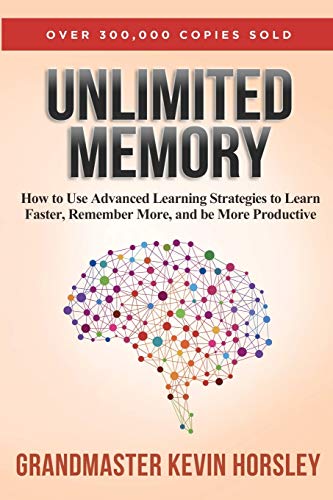
A compact, practical guide to memory techniques for learning faster and remembering more.
-
Best for performers
Derren BrownBeginner
The mentalist's popular book includes a section on memory techniques alongside psychology and suggestion.


Free newsletter
Mentalism, made modern. In your inbox.
Occasional emails from the MentalismPro team: a technique to practice, a routine idea, and the new guides and books worth your time. No spam, unsubscribe any time.