

Mentalists
Famous Mentalists: The Performers Who Shaped Mind Reading
Eleven mentalists from radio's golden age to today's viral clips: who they are, what made them famous, and the book each one left behind.
 By The MentalismPro TeamUpdated
As an Amazon Associate we earn from qualifying purchases. How we choose products.

Every generation has had a mind reader who became a household name. In the 1940s it was Joseph Dunninger on radio; in the 1970s The Amazing Kreskin on late-night television; in the 2000s Derren Brown on British TV; and today Oz Pearlman, whose clips reach millions of people who had never heard the word mentalist. Behind them stand the writers and inventors whose books every performer still studies.
This guide covers eleven famous mentalists, past and present: who they are, what made them famous, and, where one exists, the book that best represents their work. If you are new to the art itself, start with our explanation of what a mentalist is.
Famous Mentalists at a Glance
| Mentalist | Country | Active | Known for | Book to read |
|---|---|---|---|---|
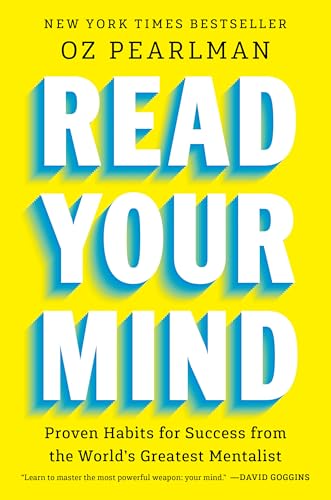
| Oz Pearlman | USA | Today | America's Got Talent, viral PIN and name reveals | Read Your Mind |
| Derren Brown | UK | Today | TV specials, stage shows, psychological stunts | Tricks of the Mind |
| Banachek | UK-born | Today | Project Alpha, Penn & Teller's bullet catch | Psychological Subtleties |
| Lior Suchard | Israel | Today | Corporate and talk show mind reading | Mind Reader |
| The Clairvoyants | Austria | Today | Two-person telepathy, AGT runners-up | None |
| Colin Cloud | Scotland | Today | "Forensic" mind reading in the style of Sherlock Holmes | None |
| The Amazing Kreskin | USA | 1960s to 2020s | 1970s TV, the hidden paycheck | Secrets of the Amazing Kreskin |
| Joseph Dunninger | USA | 1920s to 1960s | Radio and early TV mind reading | Dunninger's Complete Encyclopedia of Magic |
| Theodore Annemann | USA | 1920s to 1942 | The Jinx magazine, modern methods | Practical Mental Magic |
| Tony Corinda | UK | 1950s to 1960s | 13 Steps to Mentalism | 13 Steps to Mentalism |
| Max Maven | USA | 1970s to 2022 | Inventor, consultant, the Color Series | PRISM |
Famous Mentalists Today
These are the performers people search for after a viral clip or a television special. Each of them is open about performing an art, and each built a career on presentation as much as method.
Oz Pearlman
Born in Israel in 1982 and raised in the United States, Oz Pearlman studied electrical engineering at the University of Michigan and worked at Merrill Lynch before quitting to perform full time. He finished third on season 10 of America's Got Talent in 2015, and in 2025 his appearance on The Joe Rogan Experience, where he named Rogan's ATM PIN, and a 60 Minutes profile made him the most talked-about mentalist in the country. CBS reports that much of his work is at corporate events and for NFL and college football teams. His line is "I don't read minds, I read people." Curious about the methods? Our page on how Oz Pearlman does it covers what he has said publicly, without exposing his work.
Book: Read Your Mind (2025), a habits and success book rather than a manual of effects.
Derren Brown
The best-known British mentalist, Derren Brown became famous with the Channel 4 series Mind Control in 2000 and went on to television specials, long-running stage shows, Netflix specials such as The Push and Sacrifice, and the Broadway show Secret. He describes his work as a mixture of magic, suggestion, psychology, misdirection and showmanship, and he has made several specials that debunk psychics and faith healers.
Book: Tricks of the Mind, his accessible guide to memory, suggestion, hypnosis and the psychology of belief.
Banachek
Banachek was born Steven Shaw in England in 1960. As a teenager he was one of the two young magicians in James Randi's Project Alpha, who between 1979 and 1982 convinced researchers at a parapsychology laboratory that they had psychic abilities, exposing the weak controls of the experiments. He later created a version of the bullet catch that Penn & Teller bought in 1995, and he is widely respected among performers as an inventor and consultant.
Book: Psychological Subtleties, his series on the verbal and psychological touches that make methods invisible.
Lior Suchard
Israeli mentalist Lior Suchard first became known in Israel when he won The Successor, a television competition built around finding a successor to Uri Geller. He now performs internationally, much of it at private and corporate events, with a style built on fast, interactive mind reading demonstrations.
Book: Mind Reader (2012), which mixes his story with practical advice on communication and influence.
The Clairvoyants
Austrian duo Thommy Ten and Amélie van Tass finished second on season 11 of America's Got Talent in 2016. Their act is a modern version of the oldest format in mentalism, two-person telepathy: one partner, blindfolded, names objects and details the other is shown by the audience. On the show, van Tass named the brand and shade of a lipstick taken from judge Heidi Klum's purse.
Book: the duo has no book of their own on the market; their live show is the way to see them.
Colin Cloud
Scottish mentalist Colin Cloud bills himself as a forensic mind reader, inspired by Arthur Conan Doyle's Sherlock Holmes. He studied forensic investigation at Glasgow Caledonian University before turning to performance, reached the semifinals of America's Got Talent season 12 in 2017, and has toured with The Illusionists.
Book: none that we can point to; see him live.
Famous Mentalists in History
The modern art rests on these names. Some were stars to the public; others were famous mainly among magicians for the methods and books they left behind.
The Amazing Kreskin
Born George Joseph Kresge Jr. in 1935, Kreskin was inspired as a boy by the comic strip hero Mandrake the Magician and became a television fixture from the 1970s, with his own series and countless appearances on talk shows from Merv Griffin and Johnny Carson to Jimmy Fallon. His signature effect was finding his own paycheck, hidden somewhere in the audience; if he failed, he went without his fee. He died at his home in Caldwell, New Jersey, in December 2024, aged 89.
Book: Secrets of the Amazing Kreskin, one of the many books he wrote for a general audience.
Joseph Dunninger
Joseph Dunninger (1892 to 1975), "The Amazing Dunninger", was one of the first mentalists to reach a mass audience through radio and then television. He kept a standing offer of ten thousand dollars to anyone who could prove he used confederates, and like Houdini he campaigned against fraudulent mediums. A line usually attributed to him sums up the mentalist's stance: for those who believe, no explanation is necessary; for those who do not, no explanation will suffice.
Book: Dunninger's Complete Encyclopedia of Magic, a broad illustrated collection of classic magic.
Theodore Annemann
Theodore Annemann (1907 to 1942) gave mentalism much of its modern shape. From 1934 he published The Jinx, a magazine for magicians that ran to 151 issues and introduced a stream of new effects and methods, many still in use. His collected work, published after his death, is the backbone of countless routines.
Book: Practical Mental Magic, the Dover edition of his classic collection and still the best first book for beginners.
Tony Corinda
Tony Corinda (1930 to 2010) was the stage name of Thomas William Simpson, a London mentalist and magic dealer. His series of thirteen booklets, bound in 1961 as Thirteen Steps to Mentalism, became the standard reference of the art; our guide to 13 Steps to Mentalism walks through each step.
Book: 13 Steps to Mentalism, here in the edition bound with William Rauscher's history of mind readers.
Max Maven
Max Maven (born Philip Goldstein, 1950 to 2022) was both a striking performer and one of the most prolific inventors in mentalism, consulting for David Copperfield, Penn & Teller, Siegfried & Roy and Doug Henning. Magic magazine named him among the 100 most influential magicians of the 20th century. His early booklets, the Color Series, became collector's items before they were gathered into one volume.
Book: PRISM: The Color Series of Mentalism, all 53 effects with new illustrations.
Books by Famous Mentalists
-
Today's best-known mentalist
Oz PearlmanBeginner
Habits, focus and influence from the America's Got Talent finalist. Mindset rather than methods.
-
The British star
Derren BrownBeginner
Memory, suggestion, hypnosis and skepticism, written for a general reader.
-
The performer's mentalist
BanachekIntermediate
The psychological details that make methods disappear, from the creator of Penn & Teller's bullet catch.
-
Israel's star mentalist
Lior SuchardBeginner
His story plus practical advice on communication and influence.
-
The 1970s TV legend
Secrets of the Amazing Kreskin
The Amazing KreskinBeginner
Kreskin in his own words, from one of the best-known mentalists of the television age.
-
The radio pioneer
Dunninger's Complete Encyclopedia of Magic
Joseph DunningerBeginner
A broad illustrated collection of classic magic from mentalism's first mass-media star.
-
The father of modern methods
Theodore AnnemannBeginner
The classic collection of effects with ordinary objects. The best first book for anyone who wants to perform.
-
The mentalist's bible
13 Steps to Mentalism + Mindreaders
Tony Corinda and William RauscherAll levels
Corinda's complete course with Rauscher's history of famous mind readers.
-
The great inventor
PRISM: The Color Series of Mentalism
Max MavenIntermediate to advanced
The legendary Color Series in one illustrated volume.


Who Is the Best Mentalist in the World?
There is no ranking that settles it, because mentalists are judged on different things. Three fair ways to answer the question:
The Most Famous
By public recognition, Derren Brown and Oz Pearlman lead today, and The Amazing Kreskin and Dunninger led in their eras. Pearlman's publisher bills him as "the world's greatest mentalist" in the subtitle of his book, a marketing line rather than an independent verdict.
The Most Influential
Among performers, the answer is usually Annemann, Corinda or Max Maven, because their methods and writing shaped what everyone else does. Banachek belongs in that conversation for his psychological methods and his work for other performers. If you want to study them, our list of the best mentalism books puts their work in a sensible reading order.
The Best Live
Live performance is personal taste. Two-person acts like The Clairvoyants, character-driven performers like Colin Cloud and interactive mind readers like Lior Suchard each offer a different kind of show, and the only way to judge is to see them.
Famous Names Often Called Mentalists
Uri Geller
Uri Geller became world famous in the 1970s for spoon bending and claimed his abilities were genuine, which set him apart from the mentalists on this page, who present their work as performance. Skeptics including James Randi spent years demonstrating that his feats could be reproduced by conjuring. Our page on spoon bending covers that story.
Patrick Jane and Other Fictional Mentalists
Many searches for famous mentalists are really about The Mentalist, the CBS series whose hero, Patrick Jane, is a former fake psychic who helps solve crimes. He is fiction, but the show's premise (a skilled observer who uses cold reading and psychology, not powers) is a fair picture of how real mentalists describe their craft.
Free newsletter
Mentalism, made modern. In your inbox.
Occasional emails from the MentalismPro team: a technique to practice, a routine idea, and the new guides and books worth your time. No spam, unsubscribe any time.