

Technique
How to Hypnotize Someone: A Safe, Evidence-Based Guide
 By The MentalismPro TeamUpdated
As an Amazon Associate we earn from qualifying purchases. How we choose products.
To learn how to hypnotize someone, start with a willing adult, a quiet room and a slow, calm script: ask them to focus on one point, relax the body step by step, and offer simple suggestions they can choose to follow. Hypnosis is not a switch you flip in another person. It is focused attention plus a responsiveness to suggestion that the subject brings with them; you guide, they do most of the work.
This guide covers what the research says hypnosis is, who responds most, the safety rules that come before any technique, a low-risk relaxation induction, four classic suggestibility tests, how to bring someone back, and the myths worth dropping. Think of it as hypnosis for beginners who want to do it honestly.
What Hypnosis Is (and What It Isn't)
Most beliefs about hypnosis come from films and stage shows: a swinging watch, glazed eyes, a person who obeys any command. The research picture is quieter.
The Official Definition
In 2014, the executive committee of the American Psychological Association's Division 30 (the Society of Psychological Hypnosis) adopted a working definition of hypnosis: "a state of consciousness involving focused attention and reduced peripheral awareness characterized by an enhanced capacity for response to suggestion." It defines hypnotizability as "an individual's ability to experience suggested alterations in physiology, sensations, emotions, thoughts or behavior during hypnosis." The definitions are reproduced by the International Journal of Clinical and Experimental Hypnosis, which notes they were written to be largely atheoretical.
State Versus Non-State Views
Researchers still disagree about the mechanism. The "state" view, associated with Ernest Hilgard, holds that hypnosis is a distinct altered state. The "non-state" or sociocognitive view, associated with Theodore Sarbin, Nicholas Spanos and Irving Kirsch, holds that ordinary processes do the work: expectation, motivation, absorption in imagination and the social role of being a subject. For a beginner, both camps agree on the practical point: what the subject expects and imagines drives the experience.
Does Hypnosis Work?
Responses to suggestion are real and measurable. A 2016 Stanford study led by Heidi Jiang with senior author David Spiegel, published in Cerebral Cortex, found changes in the dorsal anterior cingulate and in connections between the dorsolateral prefrontal cortex and the insula during hypnosis, seen only in highly hypnotizable people (Stanford Medicine summary). What hypnosis does not do is give you control over another person.
Who Can Be Hypnotized?
Almost everyone responds to some suggestions, but the response varies far more between subjects than between hypnotists. If a session goes nowhere, it usually says more about the person's natural responsiveness than about your voice.
Hypnotizability Is a Stable Trait
The same Stanford Medicine report says only about 10 percent of the population is generally categorized as highly hypnotizable. Researchers treat hypnotizability as a fairly stable personal characteristic, not something you can install in someone else.
Measuring It: The Stanford Scales
The standard research instruments are the Stanford Hypnotic Susceptibility Scales, developed by André Weitzenhoffer and Ernest Hilgard at Stanford, and the group version derived from them, the Harvard Group Scale. After a standard induction, suggestions run from easy (an arm feeling heavy) to hard (not seeing an object that is there), and each response is scored.
What Does and Doesn't Predict It
| Factor | What the research generally suggests |
|---|---|
| Absorption (getting lost in books, films, music) | Linked to higher responsiveness, though modestly |
| Positive expectations | Strongly shape the response |
| Being "weak-minded" or gullible | Not a predictor; a myth |
| Fear of losing control | Reduces the response; reassurance helps |
Safety and Ethics Come First
A relaxation induction with a healthy, willing adult is low-risk. Risk comes from who you choose, what you suggest and how you frame it.
Consent Is Non-Negotiable
Ask clearly: "Would you like to try a relaxation and focus exercise? You can stop any time by opening your eyes." Explain what you will and will not do. Consent given as a joke, under peer pressure or after drinks is not consent. If they hesitate, do not persuade.
Who You Should Never Hypnotize
- Minors. In the UK, section 3 of the Hypnotism Act 1952 makes it an offence to perform hypnotism on anyone under 18 at an entertainment open to the public.
- People with epilepsy, schizophrenia or a history of psychosis. The NHS lists these as conditions in which hypnotherapy may not be safe.
- People living with trauma, severe depression or dissociation. That belongs with a clinician.
- Anyone who has been drinking or using drugs.
- Anyone as a prank. Hypnosis on an unwilling or unaware person is a breach of trust.
What You Should Never Suggest
Keep suggestions neutral and pleasant: heaviness, lightness, warmth, a calm place. Never suggest anything embarrassing, sexual or frightening, forgetting the session, regressing to childhood, or "uncovering" memories. Never suggest changes to health, medication or eating.
When to See a Professional
For pain, anxiety, smoking, sleep or any medical or psychological concern, refer the person to a licensed clinician trained in hypnosis. Rules on hypnotherapy and stage hypnosis vary by country and by US state, so check local law before performing in public.
Classic Suggestibility Tests to Try First
These short tests are harmless, take a minute each and show how responsive a person is. They work mostly through the ideomotor effect: imagining a movement produces small, real muscle movements without a sense of effort.
Magnetic Fingers
Ask the person to clasp their hands and extend both index fingers upward, about 2.5 cm (1 in) apart. "Imagine a magnet pulling your fingers together, closer and closer." Muscle fatigue does part of the work, imagination the rest; in most people the fingers drift together within a minute.
The Hand Clasp
Have them interlace their fingers tightly and imagine the hands are glued. After 20 to 30 seconds of suggestion, invite them to try to pull them apart. Responsive people find the hands feel stuck for a moment. Always finish with: "Now relax, and your hands come apart easily."
The Light and Heavy Arms
Eyes closed, arms straight out, palms facing each other. Suggest a helium balloon tied to one wrist and a heavy bucket hanging from the other. After a minute, ask them to open their eyes; responsive people find their hands have drifted apart.
Chevreul's Pendulum
Give them a ring on a thread about 25 cm (10 in) long, elbow on a table. Ask them to keep the hand still and imagine the ring swinging side to side, then in a circle. It usually obeys, a gentle way to show a nervous person that nothing strange is happening to them.
How to Hypnotize Someone: A Simple Relaxation Induction
A progressive relaxation induction is the gentlest kind and the best for a first session. Speak at roughly half your normal pace, with pauses, and plan 10 to 15 minutes in total.
Set the Scene
A quiet room, a comfortable chair with arm support, soft light, phones on silent. Sit at an angle to the person, not looming over them. Tell them what will happen: "I'll guide you through relaxing, then count you back up. You'll hear everything."
Frame It Honestly
Present hypnosis as something they do with your help: "Hypnosis is a skill of focus. I'll give you ideas; go along with the ones that feel good." It is accurate, and it works better than claiming power.
Step by Step: A Low-Risk Relaxation Induction
-
Fix the attention
Ask them to look at a spot slightly above eye level and notice their breathing. After a minute, suggest the eyelids feel heavy and can close when ready.
-
Relax the body in order
Move from forehead to feet: eyes, jaw, neck, shoulders, arms, chest, legs. "Let the muscles of your jaw soften, loose and comfortable." About 20 seconds per area.
-
Deepen with a count
"I'll count down from ten to one. With each number, drift twice as relaxed." Pause on each number for one slow breath.
-
Add a calm place
Invite them to imagine a place where they feel safe and comfortable, noticing colors, sounds and temperature. Leave a minute of silence.
-
Offer one gentle suggestion
For example: "Your right arm is becoming light, as if it wants to float. Let it rise if it wants to." If it stays down, praise the relaxation; there is no failure here.
-
Bring them back
Use the count-up below, then chat normally. Ask what it felt like before saying what you saw.
How to Bring Someone Out of Hypnosis
The Count-Up
First, remove every suggestion: "Your arm is back to its normal weight, everything is exactly as it was." Then: "I'll count from one to five. At five, you'll open your eyes feeling awake and clear-headed. One... two, feeling the chair beneath you... three, energy returning... four... five, eyes open, wide awake." Say five a little louder.
If They Feel Drowsy
Some people feel groggy for a minute or two, as after a nap. Have them stay seated, stretch and drink water. Nobody should drive while still drowsy. If they seem foggy, repeat the count-up more briskly.
Can Someone Get Stuck in Hypnosis?
No, that is a film myth. If you stopped talking, the subject would open their eyes or, if tired, drift into ordinary sleep and wake up naturally. Hypnosis depends on ongoing attention and cooperation, so it ends when those stop.
Stage, Clinical and Self-Hypnosis Compared
| Type | Purpose | Who it suits | Main caution |
|---|---|---|---|
| Stage hypnosis | Entertainment | Screened volunteers who want to perform | Social pressure, embarrassing suggestions |
| Clinical hypnosis | Pain, anxiety, habits | Patients of a licensed professional | Belongs inside proper care |
| Self-hypnosis | Relaxation, focus, sleep routines | Most healthy adults | Not a substitute for treatment |
Stage Hypnosis
Stage hypnotists pick the most responsive volunteers with quick tests, then rely on the setting: a spotlight, an expectant crowd and a clear role to play. Sociocognitive researchers see stage shows as evidence that expectation and compliance carry much of the effect.
Clinical Hypnosis
Division 30 defines hypnotherapy as the use of hypnosis in the treatment of a medical or psychological disorder or concern: one tool used by a trained clinician alongside other treatment.
Self-Hypnosis
The induction above works almost unchanged on yourself, and it is the best way to learn what the experience feels like from the inside.
Hypnosis Myths Worth Dropping
Myth: Hypnosis Is Mind Control
Subjects stay aware and keep their judgment; many describe it as relaxed concentration. Suggestions that clash with a person's values are typically rejected.
Myth: You Can Make People Act Against Their Will
Searches like "hypnotize someone to fall in love" or "without them knowing" come from this myth. You cannot create real feelings in someone, and using suggestion on a person who has not agreed to it is manipulation. No honest teacher covers it.
Myth: Hypnosis Unlocks Accurate Memories
In a 2001 study presented at the American Psychological Association's annual meeting, Joseph Green of Ohio State University and Steven Jay Lynn found that hypnotized participants were no more accurate than a relaxation group, but were less likely to change their answers when told some were wrong (Ohio State news release). Confidence goes up, accuracy does not, which is why you should never use hypnosis to "recover" memories.
How Mentalists Use Suggestion Without Hypnosis
Mentalists borrow from hypnosis constantly but rarely hypnotize anyone. They use the same ingredients, expectation, focus and the ideomotor effect, inside a performance framed as entertainment.
The Ideomotor Effect on Stage
Pendulum routines and muscle reading rest on small involuntary movements that follow a thought. The audience sees a volunteer's own hand give away the answer. The background is in our guide to how mentalism works.
Suggestion Woven into Language
Performers such as Derren Brown are open about mixing suggestion, psychology and showmanship, and about the fact that some of what looks like suggestion is old-fashioned method. Our page on whether mentalism is real explains where that line sits.
Choosing Responsive Volunteers
Like stage hypnotists, mentalists use quick tests such as magnetic fingers to spot who responds well, then build the routine around that person. See where it fits among the other mentalism techniques.
Books to Go Further
-
Best on how suggestion works
Steven Heller and Terry SteeleBeginner
A readable classic arguing that everyday life is full of trance-like states, and that hypnosis is less mysterious than it looks.
-
Best skeptical view
Derren BrownBeginner to intermediate
Brown covers suggestion, hypnosis and memory from a performer's side, while questioning the supernatural claims around them.
-
Best on everyday persuasion
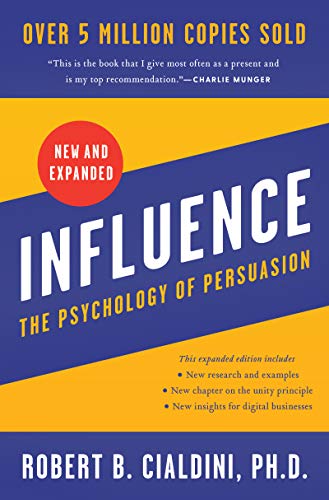
Robert B. CialdiniAll levels
Not about hypnosis, but the clearest account of the social pressures, such as authority and social proof, that make stage settings so powerful.


For the craft side, see our list of the best mentalism books.
Free newsletter
Mentalism, made modern. In your inbox.
Occasional emails from the MentalismPro team: a technique to practice, a routine idea, and the new guides and books worth your time. No spam, unsubscribe any time.