

Mentalists
How Does Oz Pearlman Do It?
What the mentalist himself says about his work, the general principles behind mind reading performances, and why we will not expose his methods.
 By The MentalismPro TeamUpdated
As an Amazon Associate we earn from qualifying purchases. How we choose products.

Oz Pearlman names a stranger's ATM PIN on a podcast, tells a football player the name he is thinking of, or names the serial number on someone's dollar bill, and millions of people ask the same thing: how does Oz Pearlman do it? The short answer is that he is a mentalist, a performer who creates the experience of mind reading, and he says so openly. His own explanation is psychology, observation, influence and decades of practice.
What he does not do is explain his specific methods, and neither will we. This page sets out what Pearlman has said publicly about his work, the general principles that mentalism as an art has relied on for a century, and why his moments feel so impossible to the people watching. It is the honest answer without spoiling the show.
What Oz Pearlman Says About How He Does It
Pearlman talks about his craft more openly than many performers, but always at the level of principles. Four ideas recur in his interviews.
"I Read People"
His catchphrase sums up his position: "I don't read minds, I read people." He presents himself as a close observer of human behavior, not a psychic, and he has said in interviews that he is not psychic and cannot talk to the dead.
"One Big Lie"
In his October 2025 60 Minutes profile, Pearlman told CBS that his act is "based on one big lie", and that the lie is "that I can read your mind". He added that "there's nothing supernatural about what's going on." CBS reported that he studies body language and patterns of eye movement.
Listening
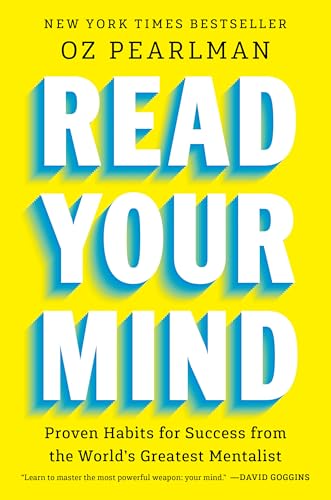
In a 2018 interview with CNBC Make It, he said: "A huge part of my show [is] very simple. It's listening." Most people, he explained, are planning their next sentence instead of hearing what the other person says. His book, Read Your Mind, builds on the same idea; our guide to the book covers what the publisher says it teaches.
Steering Choices
On 60 Minutes he also said, "I'm getting you to make very specific choices," describing how a performer can present what feels like an infinite set of possibilities while guiding the decision. Asked to explain the actual techniques, he refused: "I am not gonna tell you. That doesn't do well for my job security."
The General Principles Behind Mind Reading Performances
Pearlman will not say which method he uses for which effect, and nobody outside his circle can say for certain. What we can do is describe the toolkit that mentalism as an art has documented for nearly a century in books by Theodore Annemann, Tony Corinda, Ian Rowland and others. These principles are the background to any mentalist's act. None of what follows is a claim about how Pearlman performs a particular piece. For a fuller explanation, see how mentalism works.
Influence and Psychological Forces
People are less random than they feel. Asked to name a number, a color or a shape, many choose the same few answers, and the way a question is phrased shifts those odds further. Mentalists have studied these tendencies for decades, and books such as Banachek's Psychological Subtleties are devoted to the wording, timing and framing that guide a choice while leaving the spectator sure they chose freely.
Observation and Body Language
Hesitation, a glance, a change in posture when the right answer is mentioned: people leak information constantly. Former FBI agent Joe Navarro's What Every Body Is Saying is the standard popular book on reading these signals. In performance, observation rarely works alone, but it lets a performer adjust in real time.
Cold Reading and Conversation
Much of what a mentalist learns comes from the spectator, during a conversation that seems casual. Cold reading describes the techniques, from statements that fit almost anyone to the way feedback is gathered and reflected back. Ian Rowland's Full Facts Book of Cold Reading is the definitive text.
Preparation and Practice
CBS reported that Pearlman has spent thousands of hours practicing over decades. Mentalism looks spontaneous because the performer has rehearsed every path a moment can take. That preparation is invisible by design.
Showmanship and Memory
The most underrated principle is that audiences remember the climax, not the process. A minute of casual chat, a question asked twice or a change of subject disappears from memory, and what remains is "he just knew". Performers build effects around this, which is why retellings of a mentalism routine are almost always more impossible than what actually happened.
The Famous Moments, Without the Spoilers
These are the effects people search for most. We describe what viewers saw and why it lands so hard, not how it is done.
The PIN Reveal
On The Joe Rogan Experience in June 2025, Pearlman named the PIN of Rogan's bank card after a short exchange that began with Rogan thinking of a different, made-up four-digit number, according to news reports of the episode. Rogan's visible discomfort made the clip. The power of the effect is personal: a PIN is a secret people have never said out loud, so the reveal feels like an intrusion into private thought. Pearlman has repeated versions of it on other shows.
Guessing Names
Naming a person a spectator is thinking of, often a childhood friend or a first love, is one of the strongest effects in mentalism because the name carries emotion. Name reveals have a long history in the art, and performers approach them in many different ways. What viewers remember is the name; what they forget is everything that happened before it.
The Serial Number
Reading the serial number of a borrowed bill is a classic genre of mentalism effect, and it is impressive because the information seems completely random and completely private. Like the other effects, it is presented as reading the spectator, and the method stays with the performer.
Why the Clips Feel Impossible
Television and social media edit for the climax. A clip shows the question and the reveal, rarely everything in between, and the audience at home judges the effect by what it saw. That is not a criticism; it is how all performance on screen works, and it is one reason mentalism has become so popular online.
Does Oz Pearlman Hypnotize People?
Pearlman does not present his act as hypnosis. He describes what he does as reading people, influence and psychology, and the spectators in his clips are wide awake and talking normally. Influence and suggestion play a part in any mentalism act, but that is not the same as a hypnotic trance.
Is It Real or an Illusion?
It is real skill presented as an illusion of mind reading. Pearlman's own words, "one big lie", are the most honest summary: the skills are real, the mind reading is the story. Our guide to whether mentalism is real covers the question across the whole art.
Why We Won't Explain His Methods
Videos and posts claiming to explain Pearlman's methods circulate online. We do not link them, we cannot verify them, and we would not repeat them if we could.
Exposure Hurts the Art
The magic and mentalism community has a long-standing ethic against revealing the working methods of living performers and of effects that are sold commercially. A performer's methods are their livelihood, often developed over years, and an exposed effect stops astonishing anyone.
What We Teach Instead
We teach principles and classic effects from the public literature of mentalism, credited to their creators, so you can build your own act. That is how every working mentalist, Pearlman included, started.
Books for the Skills Behind the Show
-
In his own words
Oz PearlmanBeginner
Pearlman's book on habits, focus and influence. The publisher presents it as mindset and success advice, not a manual of his effects.
-
Best for observation
Joe NavarroBeginner
A former FBI agent's guide to the nonverbal signals people give off without realizing it.
-
Best for conversation skills
The Full Facts Book of Cold Reading
Ian RowlandBeginner to intermediate
How information is gathered and reflected back in conversation, explained by the leading writer on cold reading.


Want to Learn the Skills Yourself?
You will not become Oz Pearlman by reading about him, but the foundations of his art are learnable. Start with simple effects that use ordinary objects, learn to listen and observe, and perform for real people as often as you can. Our plan for learning mentalism sets out what to study first and how long each stage usually takes.
Free newsletter
Mentalism, made modern. In your inbox.
Occasional emails from the MentalismPro team: a technique to practice, a routine idea, and the new guides and books worth your time. No spam, unsubscribe any time.