

Books
Read Your Mind by Oz Pearlman: A Guide to the Book
What the mentalist's book promises, what reviewers and the publisher say about it, and whether it is the right book for you.
 By The MentalismPro TeamUpdated
As an Amazon Associate we earn from qualifying purchases. How we choose products.

Read Your Mind: Proven Habits for Success from the World's Greatest Mentalist is the first book by Oz Pearlman, the mentalist many Americans first saw on America's Got Talent, on the Joe Rogan podcast or on 60 Minutes. If you searched for the Oz Pearlman book expecting a manual of mind reading tricks, the most useful thing to know up front is that the publisher presents it as something else: a book about habits, focus, influence and confidence, told through the life and craft of a mentalist.
This page summarizes what the publisher, Pearlman's own interviews and published reviews say the book covers, so you can decide whether it is the right book for you, and which book to read instead if what you want is to learn mentalism itself.
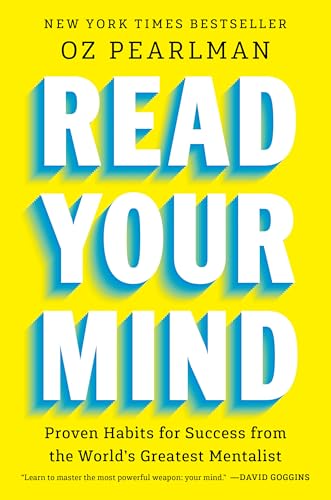
The book
Read Your Mind: Proven Habits for Success from the World's Greatest Mentalist (Oz Pearlman)
Oz Pearlman's habits and mindset book: focus, influence, confidence and overcoming rejection, drawn from three decades of performing. Best for readers who want the mentalist's mindset rather than his methods.
-
Best for reading people
What Every Body Is Saying (Joe Navarro)
A former FBI agent's practical guide to body language, the observation skill Pearlman talks about most.
-
Best mentalist's book on the mind
Tricks of the Mind (Derren Brown)
Memory, suggestion and the psychology of belief, from the British mentalist, with more about how mentalism works.


What Is Read Your Mind About?
Penguin Random House describes Read Your Mind as a book that "blends the intrigue of mentalism with practical strategies for success". In the publisher's words, it draws on over thirty years of Pearlman's experience performing and studying people, and it reveals the techniques and habits that propelled his career.
The Themes the Publisher Lists
According to the publisher's description, the book teaches readers how to:
- identify and overcome mental blocks;
- build habits that last;
- master influence;
- sharpen cognitive and emotional intelligence;
- overcome rejection and self-doubt.
Booksellers' copy adds confidence, memory and connecting with other people to that list, with strategies described as quick to learn and lasting for a lifetime.
Mindset, Not Methods
The comparison the publisher chose, Dale Carnegie's How to Win Friends and Influence People, tells you the shelf this book belongs on: business and personal development. It is not presented as a course in mentalism. The marketing does promise a look behind the curtain (one endorsement says Pearlman reveals some of his secrets for the first time), but those secrets are framed as ways of thinking, practicing and reading people, not as the methods of his signature effects. That is consistent with what Pearlman says in interviews: asked on 60 Minutes how he does it, he answered, "I am not gonna tell you. That doesn't do well for my job security."
Who Is Oz Pearlman?
Understanding the author explains the book. Pearlman's career is a story about practice, discipline and reinvention, and those are the themes the publisher puts at the center of Read Your Mind.
From Engineer to Full-Time Mentalist
Pearlman was born in Israel in 1982 and moved to the United States as a small child. He graduated from the University of Michigan in electrical engineering and went to work in technology at Merrill Lynch, performing magic on the side, before quitting to entertain full time. He told CBS that he began practicing magic as a teenager after seeing a magician on a cruise ship, and moved from card tricks to mentalism over the years that followed.
The Television Moments
Pearlman finished third on season 10 of America's Got Talent in 2015. In June 2025 he appeared on The Joe Rogan Experience, where the moment he named Rogan's ATM PIN went viral, and in October 2025 60 Minutes profiled him. He is also a serious ultramarathon runner, which fits the publisher's emphasis on habits and mental endurance. Our page on how Oz Pearlman does it covers what he has said publicly about his work.
What He Says About Reading Minds
Pearlman is open that his act is not supernatural. His line is "I don't read minds, I read people," and on 60 Minutes he described his show as based on "one big lie": that he reads minds. That honesty is the standard among modern mentalists, and it is the right frame for the book: practical psychology from a performer, not a promise of psychic ability. See is mentalism real? for the wider answer.
Is Read Your Mind a Good Book? What Reviewers Say
The book arrived with heavy promotion and strong endorsements. Here is what the published record shows, attributed so you can weigh it yourself.
Publishers Weekly
The trade magazine's review, quoted on booksellers' pages, says: "Pearlman's candid about his successes and failures alike and effectively brings mentalism down to earth with plenty of practical and productive tips." The review adds that aspiring entrepreneurs will be especially energized, which fits the business audience the publisher is aiming for.
The Endorsements
The publisher and booksellers list praise from David Goggins, Mark Cuban, Jay Shetty, Katie Couric, Adam Grant and Tony Robbins, among others. Cuban's blurb makes the point the whole campaign makes: the book is about tools rather than tricks. Booksellers also describe it as an instant New York Times bestseller.
How to Read the Praise
Celebrity blurbs are marketing by design, and a book promoted this heavily will always collect them. The Publishers Weekly review is the more independent signal, and it is positive. Reader reviews on Goodreads and retailer sites are worth a look before you buy; the recurring point to check is whether readers expected tricks and were disappointed, or expected a habits book and got one.
Ideas From Pearlman's Interviews That Point to the Book
Pearlman has given dozens of interviews over the past decade, and the same few ideas come up again and again. They are a good preview of the kind of advice the publisher describes, and none of them requires a single secret method.
Listening Is Most of the Job
In a 2018 interview with CNBC Make It, Pearlman said: "A huge part of my show [is] very simple. It's listening." His point was that in most conversations people are busy planning what to say next, so they miss what the other person is telling them. Learning to switch off that inner rehearsal and pay full attention is the habit he recommends to anyone, performer or not.
Practice Beats Talent
CBS reported that Pearlman has spent thousands of hours practicing over decades, starting with card tricks as a teenager. The publisher's focus on lasting habits reads as the same lesson applied off stage: small daily repetitions, kept up for years.
Choices Can Be Shaped
On 60 Minutes he summed up part of his craft as "I'm getting you to make very specific choices." Influence is one of the themes the publisher lists, and this is the honest version of it: understanding how people decide, so you can communicate better, rather than any claim to control minds. Joe Navarro's book on body language and our guide to reading people go further on the observation side.
Who Should Read It
Read It If You Want
- ✅ A readable personal development book with a fresh angle.
- ✅ Pearlman's story, from engineering and Wall Street to the stage.
- ✅ Advice on listening, influence, confidence and handling rejection.
- ✅ A gift for someone who loved his television appearances.
Skip It (or Pair It) If You Want
- ❌ Step-by-step mentalism effects to perform. The publisher does not present it as a methods book.
- ❌ The secrets of his PIN, name or serial number moments. Working mentalists do not publish their current methods.
- ❌ A psychology textbook. It is a performer's practical advice, not academic research.
If performing is your goal, start with our list of the best mentalism books, which puts Read Your Mind in the mindset section alongside the method books that teach actual effects.
Read Your Mind Compared With Other Mentalists' Books
| Book | Author | Type | Teaches effects? | Best for |
|---|---|---|---|---|
| Read Your Mind | Oz Pearlman | Habits and success | ❌ No | Mindset, influence, confidence |
| Tricks of the Mind | Derren Brown | Psychology and skepticism | ✅ Some | How mentalism and belief work |
| What Every Body Is Saying | Joe Navarro | Body language | ❌ No | Observation skills |
| Practical Mental Magic | Theodore Annemann | Methods | ✅ Yes | Performing your first effects |
Formats
The hardcover runs to 304 pages. There is an ebook, and the audiobook is published by Penguin Audio. Penguin Random House also lists a paperback edition. If you like Pearlman's speaking style from podcasts, the audiobook is the natural choice.
Where It Fits on a Mentalist's Shelf
Mentalists have written for the general public for a long time. The Amazing Kreskin published popular books for decades, Lior Suchard's Mind Reader mixed his story with everyday advice, and Derren Brown moved from books for magicians to books on psychology and happiness. Read Your Mind belongs to that tradition: a performer using the lessons of the stage to write for readers who will never perform. Our page on famous mentalists lists the book each of the great names left behind, if you want to compare Pearlman's approach with theirs.
If You Liked Read Your Mind, Read Next
-
Best for body language
Joe NavarroBeginner
The practical guide to nonverbal behavior from a former FBI agent. Observation training you can use every day.
-
Best on how mentalism works
Derren BrownBeginner
Memory, suggestion, hypnosis and the psychology of belief from the best-known British mentalist.
Free newsletter
Mentalism, made modern. In your inbox.
Occasional emails from the MentalismPro team: a technique to practice, a routine idea, and the new guides and books worth your time. No spam, unsubscribe any time.