

Mind Tricks: Party Tricks for Friends and the Psychology Behind Them
 By The MentalismPro TeamUpdated
As an Amazon Associate we earn from qualifying purchases. How we choose products.
Mind tricks come in two families. The first is entertainment: quick games you play on friends, where you predict a vegetable, a flower or a wrong answer before they give it. They work because people under time pressure reach for the most popular answer, and because a word planted a few seconds earlier shapes the next thing they say. The second family is everyday psychology: small techniques, studied since the 1960s, that make people slightly more likely to say yes or to like you.
This page keeps the two apart: complete methods for three classic tricks, two perception experiments that fool almost everyone, and an honest look at which psychological tricks have held up in research.
What Are Mind Tricks?
A mind trick exploits a predictable shortcut in how people think, notice or remember. Your brain makes countless quick decisions without checking them, and a trick simply puts one of those shortcuts on display.
Tricks You Perform and Tricks You Use
Performed tricks are short games with a reveal: you write a prediction, ask a question, and the answer matches. They are the entry point to mentalism. Everyday psychological tricks have no reveal, and the effect is a small shift in probability across many people, not a guaranteed result with one person.
Why They Work on Almost Everyone
Three mechanisms do most of the work. Popularity: asked for an example of a category quickly, people give the most typical one. Priming: a word you have just heard is easier to retrieve for a few seconds. Attention: people focus where you direct them and miss the rest. To see how performers build these into full routines, read our guide on how to read minds.
Mind Tricks to Play on Friends
These three routines need nothing more than a scrap of paper. They are classics passed between magicians and schoolchildren for generations, and none has a published success rate you can rely on, so each is presented as a game in which a miss is part of the fun.
1. The Vegetable Prediction
The best known of all the mind tricks to play on friends: fast arithmetic, then a sudden request for a vegetable.
Routine
The Vegetable Prediction
- Level
- Beginner
- Setup
- 1 minute
- Running time
- 1 minute
The effect
After a burst of quick sums, a friend names the first vegetable that comes to mind. A slip you wrote before you started says: carrot.
You need
- A slip of paper
- A pen
-
Write the prediction
Write "carrot" on a slip, fold it and give it to someone else to hold.
-
Set the speed
Say: "Answer each sum out loud as fast as you can." Then fire them off: 2 plus 2, 4 plus 4, 8 plus 8, 16 plus 16, 32 plus 32.
-
The switch
The instant they answer 64, say: "Name a vegetable. Quick!" Keep the same rhythm.
-
The reveal and the out
Have the slip opened and read aloud. If they named something else, say: "Most people under pressure go to carrot. You think differently." Then try it on someone else and compare.
Presentation notes
Why it works: carrot is one of the most typical vegetables for English speakers, and speed pushes people toward the most typical answer. The arithmetic mostly creates speed and distraction; popularity is the real engine, which is why the out matters.
2. The Quick-Fire Predictions
Several popular-answer questions become a scored game. Because you predict three things, one miss still leaves you two hits.
Routine
The Quick-Fire Predictions
- Level
- Beginner
- Setup
- 2 minutes
- Running time
- 3 minutes
The effect
You claim you can predict how a friend's mind works under pressure. You write three predictions, ask three fast questions and compare. You often score two out of three, and sometimes all three.
You need
- A small notepad
- A pen
-
Write three predictions
Out of sight, write: a rose; a red hammer; 7. Turn the pad face down.
-
Ask the questions fast
Say: "First thing that comes to mind." Then, with no pause: "Name a flower." "Name a tool and a color." "A number from 1 to 10." Repeat each answer so everyone hears it.
-
Score the game
Turn the pad over and tick each hit. Three out of three is "very predictable", one out of three is "a rare mind".
Presentation notes
Why it works: rose and hammer are the most familiar members of their categories, and red is a color many people name first. Seven is a common pick when people try to sound random. These tendencies come from performers' folklore, not a single study, so never repeat the test for the same person: the second time they will try to be unpredictable.
3. What Do Cows Drink?
Not a prediction but a trap, and the clearest demonstration of priming you can do in ten seconds.
Routine
What Do Cows Drink?
- Level
- Beginner
- Setup
- None
- Running time
- 30 seconds
The effect
A friend spells a word out loud, then answers a simple question about cows. They say milk. Cows, of course, drink water.
You need
- Nothing
-
Plant the word
Ask them to spell S-I-L-K out loud, then say "silk" five times fast. An alternative is to have them say "white" ten times.
-
Ask at speed
Immediately ask: "What do cows drink?" Most people say milk before they think.
-
The correction
Pause, then say gently: "Cows drink water."
Presentation notes
Why it works: silk rhymes with milk and white is strongly linked to it, so milk is already active in memory when the question arrives. It is a good opener because it is honest: you show friends a quirk of their own mind, not a power.
Two Perception Experiments That Fool Everyone
These two classics from psychology labs target perception rather than choice, so they work on far more people.
The Stroop Test
Write 15 to 20 color words in the wrong ink: "red" in blue, "green" in yellow. Ask a friend to name the ink color of each word as fast as they can. They will stumble and often read the word instead. John Ridley Stroop described the effect in a 1935 paper in the Journal of Experimental Psychology: for adults, reading is so automatic that it interferes with naming the color.
The Rubber Hand Illusion
Hide a friend's real hand behind a board on the table and place a rubber hand (or a stuffed rubber glove) where their hand would naturally be. Stroke the hidden hand and the fake one with two paintbrushes at the same moment, in the same direction, for a couple of minutes. Many people start to feel the touch in the rubber hand. Matthew Botvinick and Jonathan Cohen reported the illusion in Nature in 1998.
The Classics on Our Other Pages
The Gray Elephant from Denmark and the 1089 Book Test are on our page of mentalism tricks for beginners, and number forces such as Think of a Number are in our math mind reading tricks. A pendulum that seems to answer questions by itself is explained on our page about the ideomotor effect.
| Trick | Principle | Props | How often it lands |
|---|---|---|---|
| Vegetable Prediction | Popular answer under speed | Paper, pen | Often; needs an out |
| Quick-Fire Predictions | Popular answers | Notepad, pen | Usually two or three hits |
| What Do Cows Drink? | Priming | None | Most people, first time only |
| Stroop Test | Automatic reading | Colored pens | Nearly everyone |
| Rubber Hand Illusion | Sight overriding touch | Rubber glove, two brushes | Many people, not all |
Psychological Tricks With Real Evidence
Most lists of psychological tricks online give no source. Each technique below comes from a published experiment. Remember what an experiment shows: across a group of strangers, a technique shifted the proportion who said yes. It promises nothing about one person.
Foot-in-the-Door: Start Small
In Freedman and Fraser's 1966 study, homeowners were asked to put a large, unattractive "Drive Carefully" sign in their yard. About 76 percent of those who had first agreed to display a small safe-driving sign said yes, against about 17 percent of those asked only the big request. Agreeing to something small seems to change how people see themselves. Later studies have been mixed, so treat it as a tendency, not a rule.
Door-in-the-Face: Start Big
In Cialdini and colleagues' 1975 experiment, students were first asked for a large, long-term volunteering commitment with young offenders. Those who refused and were then asked to chaperone the group on a single zoo trip agreed far more often than students asked only about the zoo trip, and a 2021 direct replication by Oliver Genschow and colleagues found similarly high compliance. You came down, so they meet you halfway.
Reciprocity: Give First
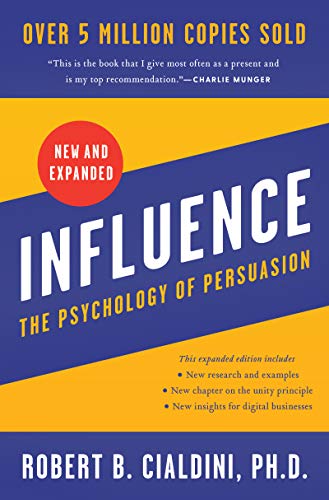
People feel obliged to return a favor, even a small unrequested one; it is one of the core principles in Robert Cialdini's book Influence. In Strohmetz and colleagues' 2002 study of restaurant tipping, diners who received candy with the check tipped more than diners who received none. The decent use is simple: help first, without keeping score.
Psychology Tricks for Everyday Conversations
These psychology tricks are about how people come to like each other, and they are close cousins of the skills in our guide on how to read people.
The Mere Exposure Effect
We tend to like things more simply because we have seen them before. Robert Zajonc showed this in a 1968 paper using nonsense words and unfamiliar characters. Robert Bornstein's 1989 meta-analysis pooled two decades of these studies and found that the size of the effect depends on conditions such as how long and how often something is shown. Being a familiar, friendly presence helps; showing up constantly does not.
The Benjamin Franklin Effect
Franklin wrote that he won over a hostile fellow legislator by asking to borrow a rare book, then returning it with a note of thanks. In Jecker and Landy's 1969 study, participants personally asked by the experimenter to return money they had won liked him more than those not asked. The evidence is thinner than for foot-in-the-door, but asking someone for a small favor, sincerely, is a compliment.
Mirroring and the Pause
People copy the posture of whoever they are talking to without noticing. Chartrand and Bargh's 1999 paper called this the chameleon effect and found that people who were subtly mimicked liked their partner more. Mimicry that is noticed reads as mockery; the honest version is to pay attention, which produces natural mirroring anyway. A related piece of interviewers' craft, with no landmark study behind it: stay quiet for a few seconds after someone finishes, and they often fill the silence with what they really meant.
The Mind Tricks That Did Not Hold Up
Psychology has spent the last decade rerunning famous experiments with larger samples, and some popular tricks did not survive.
Power Posing
A small 2010 study by Dana Carney, Amy Cuddy and Andy Yap reported that two minutes of expansive "power poses" raised testosterone and lowered cortisol. A larger replication by Ranehill and colleagues in 2015 found no effect on hormones or behavior, though people did report feeling more powerful. In 2016 Carney published a statement saying she no longer believed the effects were real. Standing tall may help you feel confident, and that is about all the evidence supports.
Why Some Famous Results Shrink
Small studies are noisy, and the first published result tends to be the most dramatic. That is why this page names the authors and year for every claim: be wary of any list that does not let you check.
Tricks We Leave Out on Purpose
Lists online promise tricks to make someone fall in love, win every argument or make a person doubt their own memory. The first two do not work as advertised; the third is gaslighting, a form of abuse. A good test: would the technique still work if the other person knew exactly what you were doing? A sincere favor passes; pressure and deception do not. Performed tricks follow the same honesty, as our page on the Barnum effect explains.
How to Practice Before You Perform
-
Learn one trick
Pick the Vegetable Prediction or the cows question and learn the exact words.
-
Rehearse the rhythm aloud
Speed is the method. Say the questions until there is no gap between them.
-
Prepare the out
Decide in advance what you will say when the answer is wrong.
-
Perform for one friend
One person, one trick, no repeats. Notice which line got the biggest reaction.
Books on Mind Tricks and Everyday Psychology
-
Best overview
Derren BrownBeginner
The British mentalist explains suggestion, memory techniques and the psychology behind his effects, with a skeptic's eye on what is real.
-
The research behind persuasion
Robert CialdiniBeginner
The author of the door-in-the-face study explains reciprocity, commitment and the other principles of persuasion, with the experiments behind them.
-
Best for reading people
Joe NavarroBeginner
A former FBI agent's guide to nonverbal behavior, useful for noticing reactions while you perform.
-
Next step: routines
Theodore AnnemannBeginner to intermediate
A classic Dover collection of mentalism effects with ordinary objects, for when party tricks turn into a wish to perform.



Free newsletter
Mentalism, made modern. In your inbox.
Occasional emails from the MentalismPro team: a technique to practice, a routine idea, and the new guides and books worth your time. No spam, unsubscribe any time.