

Lior Suchard: The Mentalist Behind the Talk Show Mind Reading
 By The MentalismPro TeamUpdated
As an Amazon Associate we earn from qualifying purchases. How we choose products.

Lior Suchard is an Israeli mentalist who became known to American audiences through repeated appearances on late-night and daytime talk shows, where he told celebrities what they were thinking, predicted their choices and made small objects seem to move. Away from television, much of his work is private and corporate events, which is why many people first meet him through a short clip rather than a full show.
This page covers who he is, what he does on stage, what he has said in public about how he does it, what is known about his book, and how he compares with two other famous mentalists. It does not reveal the methods behind any of his effects. Those belong to him, and the useful part for most readers is the general principles anyway.
Who Is Lior Suchard?
The short version is a performer from Israel who turned an unusual childhood hobby into an international career. The details below come from his Wikipedia entry unless another source is named, and they are worth checking against his official site, liorsuchard.com, which is promotional rather than neutral.
Early Career in Israel
Wikipedia gives his birth date as 6 December 1981 in Haifa and says he performed for schoolchildren as a young boy and began doing shows at events and birthday parties at 14. He completed three years of military service in the Israeli Air Force before his television career took off. The author note for his book, as catalogued on WorldCat, says Tel Aviv instead, so treat the city as the less certain detail; what no source disputes is that he is Israeli.
In an interview with The AU Review in January 2016, he said that around the age of six he noticed he had a strong intuition about people, and that becoming a mentalist was "a process of working, developing; practicing." That framing, a skill built over years, is the one he repeats in almost every interview.
His breakthrough in Israel was The Successor, also known as The Next Uri Geller. Wikipedia says he was invited to take part in 2005, beat eight other candidates, and that the show aired in late 2006 and was sold to broadcasters in several countries, including Germany, Poland and Italy. The Times of Israel describes Uri Geller as having chosen Suchard to succeed him. For background on the man at the center of that competition, see our page on spoon bending and the Uri Geller story.
International TV
According to Wikipedia, Suchard appeared on The Tonight Show with Jay Leno five times, in 2010, 2011, 2012 and twice in 2013, and on a list of other American programs that includes The View, Good Morning America, Larry King Now, The Late Late Show with James Corden, Dr. Phil and The Ellen DeGeneres Show. His own site names Leno, Corden, DeGeneres, Dr. Phil and King as well, and adds prime-time specials in Russia, India, Australia and China.
He has also worked as a presenter. His site says he co-hosts Brain Games on the National Geographic Channel, and Wikipedia lists a Quibi series, gone mental with Lior, from 2020. Those credits matter for understanding the brand: he is positioned as an entertainer who explains the brain as much as a performer who claims to beat it.
Corporate and Private Shows
Talk show clips are the visible part. His site says he has performed in over 70 countries at high-end private events and describes him as one of the most in-demand performers for Fortune 500 companies. It describes the corporate show as "miraculous predictions, influencing thoughts and startling mind reading."
Wikipedia adds that he performed at Barbra Streisand's 70th birthday in 2012 and later joined her tour. The Times of Israel covered that relationship in 2016, quoting him on how kind she was to everyone around her. A show built for guests who may never have seen a mentalist is a different product from a theater act, and it shapes the style described next: short, interactive and personal.
What He Does on Stage
His shows are interactive and built around audience participation, according to his own site. Instead of a series of illusions performed at the audience, the format is a series of short exchanges with individual volunteers, each ending in a reveal.
Mind Reading with Celebrities
The effects that travel best online are the ones with a famous face: a host or guest writes or thinks of something, and Suchard names it, or he states a fact about them before they confirm it. The format suits television because the reaction is the climax. A well-known guest who is visibly surprised does more for the clip than any explanation could.
It is also worth knowing what a short clip leaves out. Television segments are edited, and the viewer sees the version that worked. This is true of every mentalist on television, not a criticism of Suchard in particular, and our guide to whether mentalism is real explains why the edited moment feels stronger than the live one.
Influence and "Moving" Thoughts
His site says he "steers their thoughts in the right direction" so that participants arrive at what he has predicted, and it lists visual and verbal suggestion, body language, guided imagery, NLP and "the clever use of props" among the tools. This is the core idea of modern mentalism: some of what looks like reading a thought is actually shaping the choice. When a performer asks a volunteer to "imagine" a card, a drawing or a number, the way the question is phrased narrows what the volunteer is likely to say.
The same page states plainly that he "does not read the minds of the people appearing in his shows or in the audience." A related page says human beings are not scientifically telepathic. Those lines are unusually direct for a performer's own marketing and are the best summary of how his work should be read.
The Spoon and Object Effects
Object effects are part of his reputation. In a 2013 profile in Open magazine, journalist Manu Joseph wrote that Suchard says he can bend spoons and move objects with his mind, and described a moment in which a pair of glasses lent by a passerby rolled across the floor, which Suchard credited to his mind. The same article noted that James Randi had earlier attributed a comparable effect to air currents.
We do not explain the method of any effect performed by a living artist, and we have not seen these effects under controlled conditions, so nothing here is a verdict on a specific trick. What can be said is general: there is no evidence from controlled testing that anyone moves objects by thought, and a stage or street performance is not controlled testing. For the history of the most famous version of this idea, read our spoon bending guide, which also includes a classic effect you can perform yourself.
How Does Lior Suchard Do What He Does?
He has never published the methods behind particular effects, and we are not going to guess at them. What he has said in public is more useful than a guess, and it is consistent across a decade of interviews.
What He Says in Interviews
In 2016 he told The Times of Israel that people often assume he is a psychic who talks to ghosts, and added: "I'm not a magician. I don't pull rabbits out of the hat or saw women in half." In the same article he said: "A mentalist is a person who uses his five senses in a special way to create the experience of a sixth sense," and that he uses "elements from psychology, non-verbal communication, body-language reading, intuition and influencing."
In the AU Review interview he said much the same: "I use a variety of techniques from psychology as well as non-verbal communication, sensitive intuition and deduction," and that what he does is "highly skilled" and "more than just tricking people." Notice what is and is not in these lists. Observation, suggestion, deduction and persuasion are named. Telepathy is not.
The General Principles Behind It
Every item on his own list is an ordinary, studied skill. People do give away information through posture, hesitation and eye movements, though far less reliably than popular articles claim. Suggestion and guided imagery shape what a volunteer thinks of first. Props and presentation control what the audience notices. Add rehearsal, and a performer who has done thousands of these exchanges has a feel for what volunteers do under a spotlight that a first-timer cannot match.
Our page on how mentalism works lays out these layers in order, and the guides to cold reading and the Barnum effect cover two of the techniques most often confused with mind reading.
What He Does Not Say
He does not describe the working of any individual effect, and that is normal. Performers protect methods because the whole value of the act is that the audience does not know them. A mentalist who says "I use body language" has answered the question in the broadest sense and kept the specifics, which is the trade.
One caution from The Times of Israel: NLP, one of the techniques his site lists, is widely regarded by scientists as unsupported. Naming it in a list of influences is better read as part of the act's vocabulary than as evidence that it works the way the label suggests.
His Book: Mind Reader
Suchard's book is Mind Reader: Unlocking the Power of Your Mind to Get What You Want, published in 2012. No one on this team has read it, so the description below is attributed to catalog and publisher-style listings rather than to our own reading.
What the Listings Say
The Open Library entry says the book covers his mind-reading, thought-influencing, prediction and telekinesis demonstrations and presents itself as a guided tour of the human brain. Retailer and library descriptions add that it mixes stories from his performances with psychology research, tips for creativity and everyday problem-solving, and some illusions and riddles. Our list of famous mentalists describes it as mixing his story with practical advice on communication and influence.
Who It Suits
Based on those descriptions, it is a general-interest book rather than a manual of effects. A reader looking for routines to perform will find more in a dedicated mentalism text, while a reader curious about the person and the thinking around the act is the likely audience. The title's promise to help you "get what you want" is a self-improvement framing, so read it as communication advice from a performer, not as a route to supernatural ability.
Books for Fans of Lior Suchard
-
His own book
Lior SuchardBeginner
Listings describe his story together with advice on communication, influence and creative thinking, written for a general reader.
-
Best overview of the psychology
Derren BrownBeginner
A British mentalist explains suggestion, memory techniques and the psychology behind stage mind reading, with a skeptic's eye.
-
A comparison read
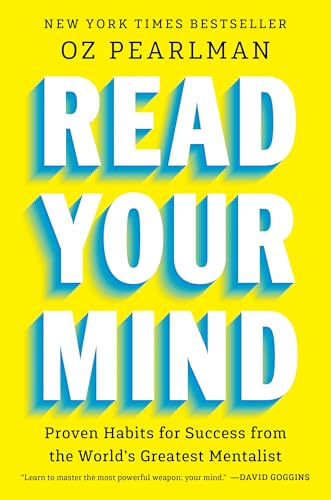
Oz PearlmanBeginner
A habits and focus book from another performer known for corporate shows and television, useful for seeing how two mentalists describe their craft.


Lior Suchard Compared With Oz Pearlman and Derren Brown
The three are often placed side by side, but they are different kinds of performer. The comparison is about style and public positioning, not about who is better.
Versus Oz Pearlman
The overlap is large. Both were born in Israel, both do a great deal of private and corporate work, and both say publicly that they read people rather than minds; Oz Pearlman's line is "I don't read minds, I read people." Pearlman finished third on season 10 of America's Got Talent in 2015, while Suchard built his television profile through talk shows and the Israeli competition. For Pearlman's own public statements, see how Oz Pearlman does it.
Versus Derren Brown
Derren Brown works in a more theatrical and explicitly psychological register: television specials, long-running stage shows, and a habit of explaining the psychology behind his effects in his writing. Suchard's public image is lighter and more conversational, centered on one-to-one reveals with a volunteer. Brown has also made specials debunking psychics and faith healers, whereas Suchard's material leans toward entertainment and corporate audiences.
Our guide to famous mentalists places all three, with the others worth knowing, in one table.
Is He a Real Mind Reader?
The question usually means one of two things: does he have supernatural ability, and is the act fake. They have different answers.
What the Evidence Supports
On the first question, he answers it himself. His site says he does not read the minds of the people in his shows, and he told The Times of Israel he is not a psychic. No controlled test has shown that any performer reads thoughts, and he does not claim one has. If you meet a performer who does claim it, our page on whether mentalism is real explains what to ask for.
Real Skill, Staged Effect
On the second question, calling it fake misses what he is doing. The skills he lists, observation, suggestion, deduction and rehearsed presentation, are real and take years to build. The effect, a stranger on a stage whose private choice is named in front of a crowd, is staged to look like something it is not. That gap between the skill and the appearance is the art, and it is why an honest mentalist is more interesting than a fraudulent psychic. If you want to start learning those skills yourself, start with this guide.
Free newsletter
Mentalism, made modern. In your inbox.
Occasional emails from the MentalismPro team: a technique to practice, a routine idea, and the new guides and books worth your time. No spam, unsubscribe any time.